
That little amber light just turned on, and now you’re stuck between panic and denial. Should you pull over immediately? Can you make it home? Is this going to cost you a fortune? Here’s what you actually need to know: your check engine light is a messenger, not a fortune teller. It’s telling you something’s off, but it won’t tell you what or how serious until you dig deeper. The pattern of that light, how your vehicle is running, and what’s actually triggering the warning all matter. You’re about to learn what causes that light to come on, how to tell if it’s urgent, and why guessing costs more than getting it checked.
What Does Your Check Engine Light Actually Mean
Your check engine light connects to your vehicle’s onboard diagnostic system, which monitors everything from fuel delivery to emissions control. When a sensor detects readings outside the normal range, the computer stores a diagnostic trouble code and lights up that engine symbol on your dash.
The light itself doesn’t diagnose anything. It just alerts you that the system found something worth investigating. That “something” could be hiding in your engine, transmission, fuel system, ignition components, or emissions equipment. It might be a mechanical failure, an electrical glitch, or a sensor that’s gone bad.
What matters most right now is whether that light is solid or flashing, and whether your vehicle is acting normal or showing other symptoms.
Solid vs Flashing: One Means Soon, One Means Now
A solid check engine light means your vehicle detected a problem that needs attention, but you’re not in immediate danger. You can usually finish your drive and schedule diagnostics within the next few days. Don’t confuse “not urgent” with “not important.” Ignoring a solid light for weeks turns minor issues into major repairs.
A flashing check engine light is your vehicle’s emergency alarm. It almost always signals an engine misfire, which dumps unburned fuel into your exhaust system. That fuel can overheat your catalytic converter in minutes, turning a $300 spark plug repair into a $1,300 catalytic converter replacement. When the light flashes, pull over as soon as it’s safe, shut off the engine, and call for help.
Some vehicles also use color coding. Amber or yellow typically means caution. Red means stop immediately. If you’re unsure, check your owner’s manual, but remember: flashing always means urgent, regardless of color.
The engine light symbol itself usually looks like a simplified engine block outline, sometimes with text like “check engine” or “service engine soon” nearby. The design varies slightly between manufacturers, but the meaning stays consistent.
What Could Check Engine Light Mean: The Usual Suspects
Let’s walk through the most common triggers, starting with the simplest fix and building up to the expensive stuff.
A loose, cracked, or missing gas cap tops the list. Your fuel system needs a tight seal to maintain pressure and prevent vapor leaks. When that seal breaks, sensors detect the problem and the light comes on. Tighten your cap until it clicks. If it’s damaged, replace it—they cost under $20. The light should reset after a few drive cycles.
Oxygen sensors live in your exhaust system and measure how much unburned oxygen is passing through. When one fails, your engine can’t adjust the fuel mixture properly. You’ll burn more gas, run rougher, and potentially damage your catalytic converter. Replacing a bad O2 sensor is straightforward and prevents bigger problems.
Your catalytic converter turns harmful exhaust gases into less toxic emissions. When it fails, you’ll notice sluggish acceleration, terrible fuel economy, and that persistent check engine light. Cat converter replacement ranks as one of the most expensive check engine light repairs, often running over $1,300. The silver lining? Catalytic converters rarely fail on their own. They usually die because you ignored another issue, like misfiring spark plugs or a bad oxygen sensor.
The mass airflow sensor tells your engine how much air is coming in so it can balance fuel delivery. A dirty or failing MAF sensor causes hesitation, stalling, rough idling, and poor mileage. Sometimes cleaning it works. Other times you need a new one.
Spark plugs and ignition coils ignite the fuel-air mixture in your cylinders. Worn plugs cause misfires, rough running, and check engine lights. Coils can fail too, especially in high-mileage vehicles. Replacing spark plugs is routine maintenance. Ignoring misfires is how you wreck a catalytic converter.
Your EVAP system captures fuel vapors and keeps them from escaping into the air. Leaks anywhere in this system—hoses, valves, or that gas cap again—will trigger the light. Diagnosing EVAP problems usually requires professional equipment like a smoke machine.
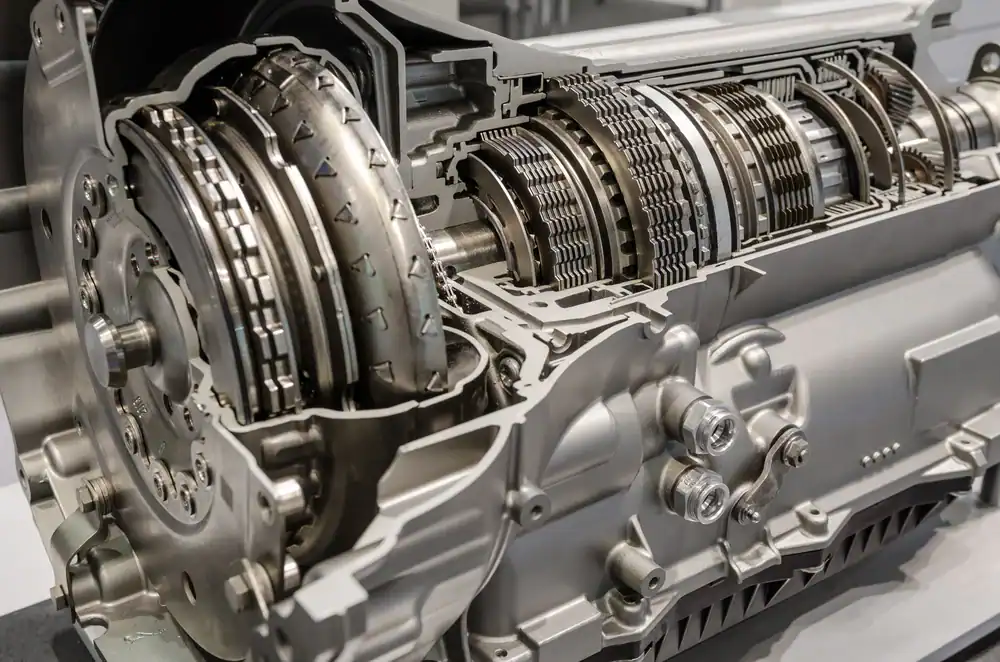
Transmission trouble can also light up your check engine warning. A failing torque converter or bad transmission solenoid gets flagged by the transmission control module, which talks to the engine computer. Result: amber light, dashboard anxiety.
Other possibilities include contaminated fuel, thermostat failure, coolant temperature sensor issues, clogged EGR valves, corroded wiring, or internal engine damage. Hundreds of different codes exist, which is exactly why professional diagnostics matter more than guessing.
How Engine Diagnostics Work (And Why They Matter)
When your check engine light turns on, your vehicle’s computer has already logged a diagnostic trouble code. That code is a string of letters and numbers pointing to the system or sensor that detected the problem. Reading the code is easy. Understanding what it actually means takes expertise.
Basic OBD-II scanners cost under $50 and plug into a port under your dashboard. Some auto parts stores read codes for free. But here’s the reality: a code tells you what flagged an error, not what’s broken. A code for an oxygen sensor might mean the sensor failed, or it could mean there’s a vacuum leak, exhaust leak, or fuel pressure issue throwing off the sensor’s readings.
Professional diagnostics go several layers deeper. Technicians use advanced scan tools that pull live data from your sensors, monitor engine performance in real time, and cross-reference manufacturer bulletins for known issues. They test components, verify readings, and confirm the actual root cause before recommending repairs.
Why Accurate Diagnostics Beat Parts Roulette
Replacing parts based on a code alone rarely works, and it gets expensive fast. You swap an oxygen sensor because that’s what the code said, then watch the light come back on two days later because the real problem was a vacuum leak or clogged fuel injector.
Real diagnostics start with code retrieval and vehicle history review, then move to visual inspection, component testing, and verification. Modern vehicles run dozens of sensors and control modules that communicate constantly. A problem in one area can trigger codes somewhere else. Sorting through that requires experience, proper equipment, and diagnostic logic.
At Pro Transmissions & Automotive of Athens, our diagnostics include a digital inspection process with photos and videos sent directly to you. You see what our technicians see—no vague explanations, no trust-me-bro repairs. Just clear documentation of the problem, why it matters, and what it takes to fix it properly.
Diagnostic fees typically run $50 to $200 depending on complexity. Some shops waive the fee if you approve the repair. Either way, paying for accurate diagnostics up front beats wasting money on wrong parts and comeback visits.
Our master-certified technicians bring another level to the table. We’ve logged thousands of hours diagnosing engines, transmissions, and electrical systems across dozens of makes and models. We know the difference between a sensor reading that’s slightly off and one that’s completely failed. We understand system interactions and where problems hide. That knowledge saves you time, money, and frustration.
When You Should Get That Light Checked
If the light is solid and your vehicle runs normally, schedule diagnostics within a few days. Don’t push it to next month. Small problems compound when ignored, and you’ll face higher repair costs or a breakdown at the worst possible time.
If the light is flashing, you need help immediately. Pull over, shut down the engine, and arrange for towing or mobile diagnostics. Driving with a flashing light risks destroying your catalytic converter and turning a manageable repair into a financial nightmare.
If your check engine light comes on alongside other warnings—oil pressure, battery, temperature—treat it as an emergency. Multiple lights usually signal a serious issue that could leave you stranded or damage your engine permanently.
Watch how your vehicle behaves when the light appears. Rough idling, power loss, unusual noises, exhaust smoke, or hard starting all suggest problems that need immediate attention, even if the light itself is solid.
In Clarke County, GA, you’ve got options for check engine light diagnostics. We use state-of-the-art diagnostic equipment and employ ASE Master Certified Technicians who specialize in engine performance, transmission systems, and emissions control. We serve Athens, Watkinsville, Bogart, and the surrounding area with transparent pricing, customer approval before work begins, and a 2-year/24,000-mile nationwide warranty on general repairs.
Whether you’re a UGA student taking advantage of our 10% discount, a military member or first responder, or just someone who values straight answers and quality work, getting your check engine light diagnosed correctly the first time saves stress, money, and vehicle downtime.
Your Next Move When That Light Comes On
A check engine light doesn’t have to ruin your week or empty your bank account. Knowing whether it’s solid or flashing tells you how fast you need to act. Understanding common causes keeps you from panicking over a loose gas cap or ignoring a serious misfire. And choosing professional diagnostics over trial-and-error parts replacement saves money every time.
Your vehicle’s computer is smart, but it’s not a mind reader. It knows something’s wrong. It can’t always tell you what or why. That’s where experienced technicians, quality diagnostic tools, and honest communication make the difference between a quick fix and a costly mistake.
If your check engine light is on and you’re anywhere in Clarke County, GA, we’re ready to help. Our master-certified technicians provide accurate diagnostics backed by a digital inspection process that shows you exactly what’s happening under your hood. No surprises. No unnecessary upselling. Just honest service with industry-leading warranties and transparent pricing.