7 Transmission Problems Every Clarke County Driver Should Know

From slipping gears to burning smells, these warning signs are ones Clarke County drivers encounter more than they'd expect — and most are caught too late.

Share:

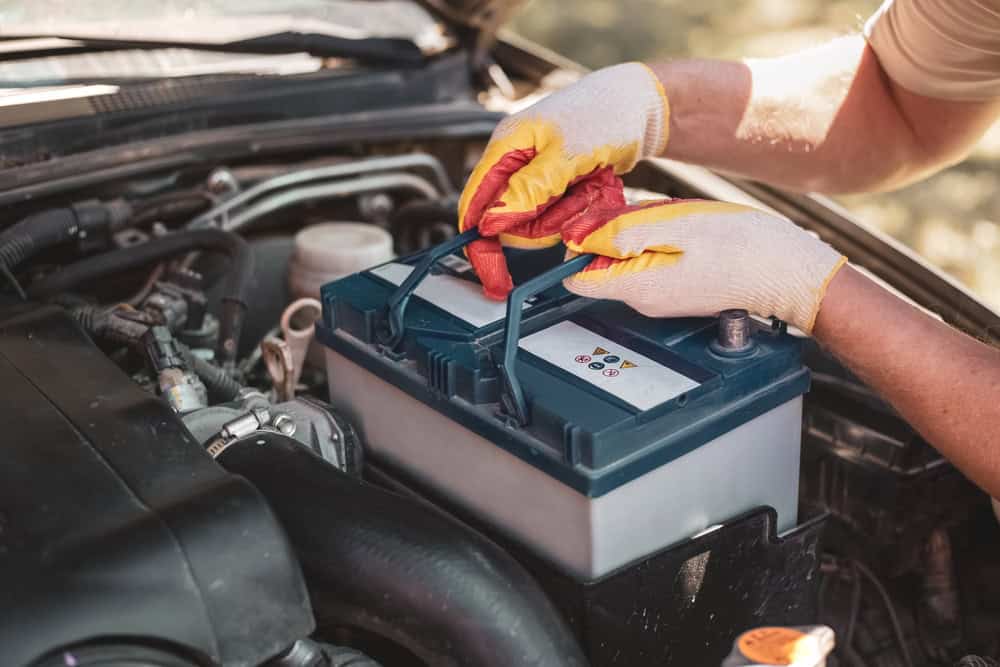
A person lifting a car battery from the engine bay using a red cloth

Most transmission problems don’t start with a loud noise or a warning light. They start with something small — a little hesitation when you pull out of a parking lot, a slight shudder on the highway, a smell that fades before you can identify it. Easy to dismiss. Easy to put off.

The problem is, transmissions don’t get better on their own. What costs a few hundred dollars to fix in the early stages can turn into a full rebuild if you wait. This page covers seven transmission problems worth knowing, what they feel like in real driving conditions, and what to do when you notice them.

Transmission Slipping: What It Feels Like and Why It Happens

Transmission slipping is one of those problems that’s hard to describe but immediately recognizable once you’ve felt it. You press the gas, the engine revs up, but the car doesn’t accelerate the way it should. It’s like the power is going somewhere other than your wheels. Sometimes it happens between gear changes. Sometimes it feels like the car unexpectedly jumps into a different gear on its own.

It’s not always dramatic. Some drivers live with a slipping transmission for months before it gets bad enough to act on. That’s the dangerous part — it’s easy to adapt to a problem that’s quietly getting worse.

Transmission Slipping Signs Clarke County Drivers Often Miss

The most common transmission slipping signs are RPMs that spike without a matching increase in speed, delayed engagement when you shift from Park to Drive, and a general feeling that the car is struggling to find its gear. You might also notice unexpected gear changes while cruising at highway speed, or a loss of power when you’re trying to accelerate from a stop.

Here in Clarke County, stop-and-go driving makes these symptoms more likely to surface. If you’re navigating the area around UGA’s campus, sitting in traffic on West Broad Street, or inching through a game day backup on a fall Saturday, your transmission is cycling through gears more frequently than it would on an open highway. That kind of driving generates heat, and heat is the single biggest accelerator of transmission wear.

Georgia summers make it worse. When outside temperatures are regularly pushing into the mid-90s and you’re sitting in slow-moving traffic, transmission fluid can reach temperatures well above its optimal operating range. Fluid that’s been pushed too hard too often starts to break down, and once it loses its ability to lubricate and cool internal components, slipping is often one of the first symptoms to appear.

The reason slipping deserves immediate attention is that it can stem from several different causes — low or degraded fluid, a worn clutch pack, a failing solenoid — and the fix for each one is different. A fluid flush might solve it. Or it might not. Without a proper diagnosis, you’re guessing, and guessing wrong on a transmission usually costs more than getting it checked out early.

Other Transmission Problems That Show Up Before a Major Failure

Slipping gets a lot of attention, but it’s one of several warning signs that something is going wrong inside your transmission. Rough or hard shifting is another common one — when gear changes feel abrupt, clunky, or jarring instead of smooth. It might happen at low speeds or on the highway, and it often gets worse over time if left alone.

Delayed engagement is related but distinct. This is when you shift into Drive or Reverse and there’s a pause — sometimes a second or two — before the car actually moves. That lag is the transmission struggling to engage, and it’s not something that typically resolves on its own.

Unusual noises are worth paying attention to as well. A whining or humming sound that changes with vehicle speed, a grinding noise when shifting, or a clunking when you first put the car in gear can all point to internal transmission problems. Some of these sounds are easier to hear on certain vehicles, and they’re often more noticeable during cold starts before the transmission fluid has fully warmed up.

Then there’s the burning smell. If you notice something that smells like something is overheating — not quite burning rubber, not quite burning oil, but something in between — it could be transmission fluid that’s been pushed past its limits. Fluid that’s been running too hot turns dark, loses its effectiveness, and starts to smell. If you’re in Clarke County during August and you’ve been sitting in traffic, this is a scenario worth taking seriously.

None of these symptoms should be ignored, but none of them automatically mean you need a full rebuild either. The only way to know is to get a proper diagnosis from someone who actually knows transmissions.

Transmission Failure Signs: When It's More Than Just a Warning

There’s a difference between a transmission that’s struggling and one that’s failing. The symptoms above are early and mid-stage warnings — the kind of problems that, caught in time, can often be addressed without a full rebuild. Transmission failure signs are different. They indicate that the damage has progressed to the point where the transmission’s ability to function is genuinely compromised.

If your vehicle goes into what’s called limp mode — where it locks into a single gear and won’t shift — that’s the transmission’s self-protection mechanism kicking in. It’s not a glitch. It’s the system telling you that something is wrong enough that it won’t risk further damage by operating normally.

What Happens When You Ignore Transmission Problems Too Long

A lot of transmission rebuilds that come through our shop could have been much simpler repairs if the driver had come in earlier. That’s just the reality of how transmissions fail. Problems compound. A worn solenoid that causes slipping, left unaddressed, puts additional stress on clutch packs and bands. Fluid that’s been running dirty for too long accelerates wear on every internal surface it touches. What starts as a $300 fix becomes a $2,500 rebuild.

The check engine light is one of the most commonly misread signals in this process. A lot of drivers assume it means something minor — a loose gas cap, an oxygen sensor — and put off getting it checked. But transmission-related fault codes are among the more serious codes a vehicle can throw, and the longer they sit undiagnosed, the more damage accumulates.

Clarke County has a lot of vehicles with high mileage — particularly among students driving older cars with unknown service histories — and those cars are already closer to the edge. A 2012 Honda Accord with 130,000 miles and no record of a transmission fluid service is a vehicle that’s one hot Georgia summer away from a problem. That’s not a hypothetical. We see it regularly.

The other thing worth understanding is that transmission fluid doesn’t last forever, regardless of what some manufacturers have claimed. The “lifetime fluid” designation that appeared on some vehicles was always more of a best-case-scenario claim than a practical recommendation. Real-world driving — especially the kind of stop-and-go, high-heat driving that’s common in Clarke County — degrades fluid much faster than ideal conditions would. A fluid service every 30,000 to 60,000 miles is a reasonable baseline for most automatic transmissions.

How a Digital Inspection Changes What You Actually Know About Your Transmission

One of the biggest sources of anxiety in auto repair — and transmission repair especially — is not being able to see what you’re being told about. A technician says you have a problem, gives you a number, and you’re left deciding whether to trust them based on nothing but their word. That’s an uncomfortable position, and it’s one of the main reasons people delay getting their car looked at in the first place.

We use a digital inspection process that documents what we find with photos and videos of your actual vehicle. Before any repair is recommended, you get to see what we see. Not a generic diagram. Not a verbal description. The actual condition of the components on your car, sent directly to you so you can review it at your own pace.

For transmission problems specifically, this matters a lot. Transmission issues aren’t always visible from the outside — they involve internal components, fluid condition, and electronic diagnostics. Being able to show a customer what degraded fluid looks like, or walk them through a fault code reading with actual data, changes the whole conversation. It turns a stressful situation into an informed one.

This is especially relevant for Clarke County drivers who may be dealing with an older vehicle and aren’t sure whether it’s worth repairing. Seeing the actual condition of your transmission — not just hearing about it — helps you make a real decision. And if the diagnosis comes back cleaner than expected, you’ll know that too. We’re not going to recommend a rebuild when a fluid service will do the job. That approach is reflected in every review we’ve earned, and it’s the standard we hold ourselves to on every vehicle that comes through our door.

Our Master ASE-certified technicians have the credentials and the hands-on experience — including 30 years of transmission-building experience — to accurately diagnose what’s actually wrong. That depth of knowledge matters when the difference between the right diagnosis and the wrong one is a thousand dollars or more.

What to Do When You Notice Transmission Problems in Clarke County, GA

The short version: don’t wait. Transmission problems are one of those situations where time almost always works against you. The earlier a problem is caught, the more options you have — and the less it typically costs to fix.

If something feels off with your vehicle, whether it’s a hesitation, a noise, a smell, or a warning light you’ve been ignoring, getting a proper diagnosis is the right first step. Not a guess. Not a fluid top-off and a hope. An actual diagnostic from someone who knows what they’re looking at.

We’re on West Broad Street in Athens, and we work on transmissions every day — including full in-house rebuilds that we don’t outsource to anyone. If you’re in Clarke County and something about your vehicle doesn’t feel right, reach out to us. We’ll tell you exactly what’s going on, show you the evidence, and give you a straight answer about what it’s going to take to fix it.

Most transmission problems don’t start with a loud noise or a warning light. They start with something small — a little hesitation when you pull out of a parking lot, a slight shudder on the highway, a smell that fades before you can identify it. Easy to dismiss. Easy to put off.

The problem is, transmissions don’t get better on their own. What costs a few hundred dollars to fix in the early stages can turn into a full rebuild if you wait. This page covers seven transmission problems worth knowing, what they feel like in real driving conditions, and what to do when you notice them.

Transmission Slipping: What It Feels Like and Why It Happens

Transmission slipping is one of those problems that’s hard to describe but immediately recognizable once you’ve felt it. You press the gas, the engine revs up, but the car doesn’t accelerate the way it should. It’s like the power is going somewhere other than your wheels. Sometimes it happens between gear changes. Sometimes it feels like the car unexpectedly jumps into a different gear on its own.

It’s not always dramatic. Some drivers live with a slipping transmission for months before it gets bad enough to act on. That’s the dangerous part — it’s easy to adapt to a problem that’s quietly getting worse.

Transmission Slipping Signs Clarke County Drivers Often Miss

The most common transmission slipping signs are RPMs that spike without a matching increase in speed, delayed engagement when you shift from Park to Drive, and a general feeling that the car is struggling to find its gear. You might also notice unexpected gear changes while cruising at highway speed, or a loss of power when you’re trying to accelerate from a stop.

Here in Clarke County, stop-and-go driving makes these symptoms more likely to surface. If you’re navigating the area around UGA’s campus, sitting in traffic on West Broad Street, or inching through a game day backup on a fall Saturday, your transmission is cycling through gears more frequently than it would on an open highway. That kind of driving generates heat, and heat is the single biggest accelerator of transmission wear.

Georgia summers make it worse. When outside temperatures are regularly pushing into the mid-90s and you’re sitting in slow-moving traffic, transmission fluid can reach temperatures well above its optimal operating range. Fluid that’s been pushed too hard too often starts to break down, and once it loses its ability to lubricate and cool internal components, slipping is often one of the first symptoms to appear.

The reason slipping deserves immediate attention is that it can stem from several different causes — low or degraded fluid, a worn clutch pack, a failing solenoid — and the fix for each one is different. A fluid flush might solve it. Or it might not. Without a proper diagnosis, you’re guessing, and guessing wrong on a transmission usually costs more than getting it checked out early.

Other Transmission Problems That Show Up Before a Major Failure

Slipping gets a lot of attention, but it’s one of several warning signs that something is going wrong inside your transmission. Rough or hard shifting is another common one — when gear changes feel abrupt, clunky, or jarring instead of smooth. It might happen at low speeds or on the highway, and it often gets worse over time if left alone.

Delayed engagement is related but distinct. This is when you shift into Drive or Reverse and there’s a pause — sometimes a second or two — before the car actually moves. That lag is the transmission struggling to engage, and it’s not something that typically resolves on its own.

Unusual noises are worth paying attention to as well. A whining or humming sound that changes with vehicle speed, a grinding noise when shifting, or a clunking when you first put the car in gear can all point to internal transmission problems. Some of these sounds are easier to hear on certain vehicles, and they’re often more noticeable during cold starts before the transmission fluid has fully warmed up.

Then there’s the burning smell. If you notice something that smells like something is overheating — not quite burning rubber, not quite burning oil, but something in between — it could be transmission fluid that’s been pushed past its limits. Fluid that’s been running too hot turns dark, loses its effectiveness, and starts to smell. If you’re in Clarke County during August and you’ve been sitting in traffic, this is a scenario worth taking seriously.

None of these symptoms should be ignored, but none of them automatically mean you need a full rebuild either. The only way to know is to get a proper diagnosis from someone who actually knows transmissions.

Transmission Failure Signs: When It's More Than Just a Warning

There’s a difference between a transmission that’s struggling and one that’s failing. The symptoms above are early and mid-stage warnings — the kind of problems that, caught in time, can often be addressed without a full rebuild. Transmission failure signs are different. They indicate that the damage has progressed to the point where the transmission’s ability to function is genuinely compromised.

If your vehicle goes into what’s called limp mode — where it locks into a single gear and won’t shift — that’s the transmission’s self-protection mechanism kicking in. It’s not a glitch. It’s the system telling you that something is wrong enough that it won’t risk further damage by operating normally.

What Happens When You Ignore Transmission Problems Too Long

A lot of transmission rebuilds that come through our shop could have been much simpler repairs if the driver had come in earlier. That’s just the reality of how transmissions fail. Problems compound. A worn solenoid that causes slipping, left unaddressed, puts additional stress on clutch packs and bands. Fluid that’s been running dirty for too long accelerates wear on every internal surface it touches. What starts as a $300 fix becomes a $2,500 rebuild.

The check engine light is one of the most commonly misread signals in this process. A lot of drivers assume it means something minor — a loose gas cap, an oxygen sensor — and put off getting it checked. But transmission-related fault codes are among the more serious codes a vehicle can throw, and the longer they sit undiagnosed, the more damage accumulates.

Clarke County has a lot of vehicles with high mileage — particularly among students driving older cars with unknown service histories — and those cars are already closer to the edge. A 2012 Honda Accord with 130,000 miles and no record of a transmission fluid service is a vehicle that’s one hot Georgia summer away from a problem. That’s not a hypothetical. We see it regularly.

The other thing worth understanding is that transmission fluid doesn’t last forever, regardless of what some manufacturers have claimed. The “lifetime fluid” designation that appeared on some vehicles was always more of a best-case-scenario claim than a practical recommendation. Real-world driving — especially the kind of stop-and-go, high-heat driving that’s common in Clarke County — degrades fluid much faster than ideal conditions would. A fluid service every 30,000 to 60,000 miles is a reasonable baseline for most automatic transmissions.

How a Digital Inspection Changes What You Actually Know About Your Transmission

One of the biggest sources of anxiety in auto repair — and transmission repair especially — is not being able to see what you’re being told about. A technician says you have a problem, gives you a number, and you’re left deciding whether to trust them based on nothing but their word. That’s an uncomfortable position, and it’s one of the main reasons people delay getting their car looked at in the first place.

We use a digital inspection process that documents what we find with photos and videos of your actual vehicle. Before any repair is recommended, you get to see what we see. Not a generic diagram. Not a verbal description. The actual condition of the components on your car, sent directly to you so you can review it at your own pace.

For transmission problems specifically, this matters a lot. Transmission issues aren’t always visible from the outside — they involve internal components, fluid condition, and electronic diagnostics. Being able to show a customer what degraded fluid looks like, or walk them through a fault code reading with actual data, changes the whole conversation. It turns a stressful situation into an informed one.

This is especially relevant for Clarke County drivers who may be dealing with an older vehicle and aren’t sure whether it’s worth repairing. Seeing the actual condition of your transmission — not just hearing about it — helps you make a real decision. And if the diagnosis comes back cleaner than expected, you’ll know that too. We’re not going to recommend a rebuild when a fluid service will do the job. That approach is reflected in every review we’ve earned, and it’s the standard we hold ourselves to on every vehicle that comes through our door.

Our Master ASE-certified technicians have the credentials and the hands-on experience — including 30 years of transmission-building experience — to accurately diagnose what’s actually wrong. That depth of knowledge matters when the difference between the right diagnosis and the wrong one is a thousand dollars or more.

What to Do When You Notice Transmission Problems in Clarke County, GA

The short version: don’t wait. Transmission problems are one of those situations where time almost always works against you. The earlier a problem is caught, the more options you have — and the less it typically costs to fix.

If something feels off with your vehicle, whether it’s a hesitation, a noise, a smell, or a warning light you’ve been ignoring, getting a proper diagnosis is the right first step. Not a guess. Not a fluid top-off and a hope. An actual diagnostic from someone who knows what they’re looking at.

We’re on West Broad Street in Athens, and we work on transmissions every day — including full in-house rebuilds that we don’t outsource to anyone. If you’re in Clarke County and something about your vehicle doesn’t feel right, reach out to us. We’ll tell you exactly what’s going on, show you the evidence, and give you a straight answer about what it’s going to take to fix it.

Article details:

Share: