

Manual Transmission Replacement Cost Breakdown

Transmission repair costs vary more than most people expect. Here's what actually drives the price — and what to look for before you pay a dime.

Share:

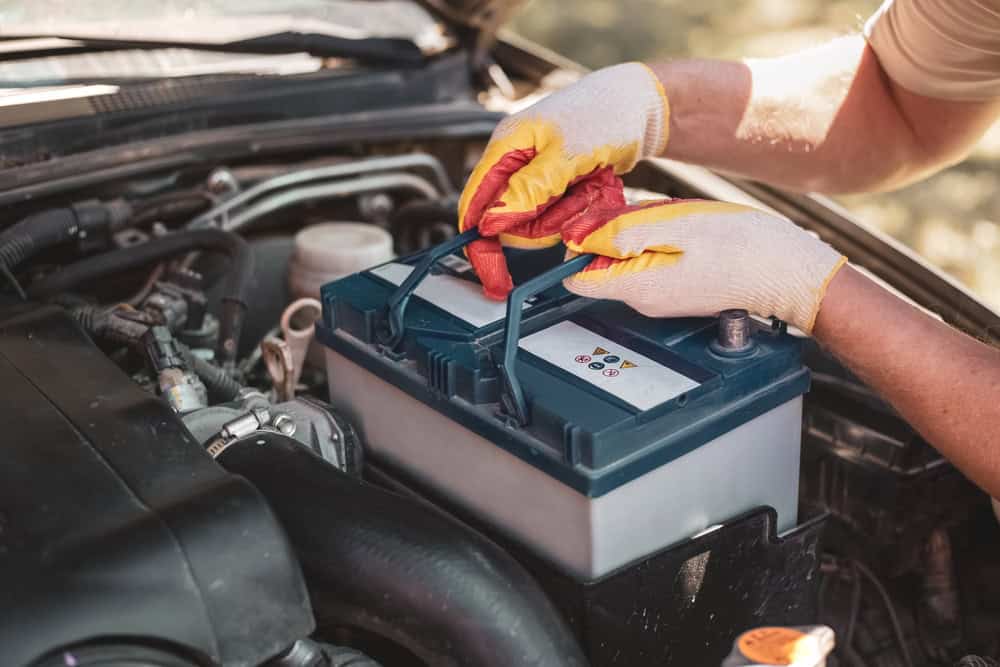
A person wearing gray gloves is working on a car engine in Athens, GA

If your transmission is slipping, grinding, or just not shifting the way it should, the cost question hits fast. You want a number, but every shop seems to give you a different one — or worse, won’t tell you anything until they’ve already pulled the car apart.

The truth is, transmission replacement cost varies depending on what you’re driving, what’s actually wrong, and who’s doing the work. We’ve been rebuilding and replacing transmissions in Clarke County, GA for decades, and we’ve seen every scenario. This breakdown covers what you can realistically expect to pay, what factors move the number up or down, and how to tell whether a quote you’ve received is fair.

Manual Transmission Replacement Cost: What the Numbers Actually Look Like

For most vehicles, manual transmission replacement runs somewhere between $1,500 and $3,000. That range covers the parts, the labor, and a standard repair on a mainstream domestic or Japanese vehicle — the kind of cars we see most often here in Clarke County.

The lower end of that range typically applies to simpler vehicles where the transmission is easier to access and less expensive to source. The higher end shows up with older trucks, performance vehicles, or anything where parts availability is limited. If you’re driving something high-end or a classic muscle car, costs can push well beyond $3,000 depending on what’s available and what condition the rest of the drivetrain is in.

Rebuild vs. Replace: Which One Is Actually Cheaper for a Manual Transmission?

This is the question that matters most, and it’s one most shops don’t explain clearly enough. A full transmission replacement means sourcing a new or remanufactured unit and swapping it in. A rebuild means pulling your existing transmission, inspecting every component, replacing what’s worn or damaged, and reassembling it to factory spec. The difference in cost is significant — rebuilds typically run $2,800 to $3,800, while a new replacement unit can cost $4,000 to $8,000 or more before labor.

In most cases, a rebuild is the smarter financial call — especially if the rest of your vehicle is in decent shape. We tell people all the time: in nine out of ten situations, repairing or rebuilding what you have is less expensive than replacing it outright. The catch is that not every shop can do a true rebuild in-house. Many general repair shops outsource this work, which adds cost and removes accountability. When the job is done by someone other than the person you spoke to, it’s harder to know what you’re actually getting.

We’re one of the few shops in Clarke County that still performs full transmission builds on-site. That means your vehicle doesn’t leave our bay to go somewhere else, and the technician who diagnoses the problem is the same one doing the work. Danny, our lead technician, has spent 30 years specifically building transmissions — not general repair with some transmission experience mixed in, but dedicated, career-long specialization in this one area of the vehicle. That depth of focus changes the quality of the outcome.

One more thing worth knowing: we back every transmission rebuild with a 24-month, unlimited mileage warranty. The industry standard is 12 months and 12,000 miles. We removed the mileage cap entirely and doubled the time coverage because we’re confident in the work. If something goes wrong within two years, it doesn’t matter how many miles you’ve put on — you’re covered.

What Drives Manual Transmission Replacement Cost Up in Clarke County, GA

A few things specific to Clarke County are worth understanding before you get a quote. The hills throughout this area put real strain on manual transmission clutches — more gear changes per mile means more wear over time, especially for drivers who commute through the west side of Athens or navigate the terrain around campus on a daily basis. It’s not a dramatic difference, but it does mean local drivers tend to see clutch and synchronizer wear a bit earlier than drivers in flatter markets.

Stop-and-go traffic around the UGA campus is another factor. Low-speed driving generates more heat per mile than highway driving, and heat accelerates wear on transmission components. If you’re a student or staff member making short trips across campus repeatedly throughout the day, your transmission is working harder than the mileage on your odometer suggests.

On the parts side, vehicle age and make have a direct impact on cost. Older vehicles — and there are a lot of them in Clarke County, given the student population driving high-mileage cars on tight budgets — sometimes require sourcing hard-to-find components, which adds to the final number. Japanese and American makes are generally easier and less expensive to source parts for than European vehicles. Labor complexity matters too: some vehicles require significantly more teardown time to access the transmission, and that additional labor time shows up in the quote.

The honest version of this is that there’s no universal number we can give you without knowing what you’re driving and what’s actually wrong. What we can tell you is that a proper diagnosis always comes before any recommendation on our end — and that diagnosis includes a digital inspection with photos and video so you can see exactly what we’re looking at before you authorize anything.

Automatic Transmission Replacement Cost vs. CVT Transmission Replacement Cost

Manual transmissions get a lot of attention in cost conversations because they’re generally the least expensive to replace — but the majority of vehicles on the road today have either an automatic or a CVT. If you’re not sure which one you have, it’s worth knowing before you start comparing quotes, because the cost difference between these three transmission types is substantial.

Automatic transmissions typically run $2,500 to $7,500 for a full replacement, with most mainstream vehicles landing in the $2,000 to $4,000 range for a remanufactured unit. CVT replacements tend to sit at the higher end of that spectrum — and often above it — because the components are more specialized and fewer shops have the expertise to work on them correctly.

Automatic Transmission Replacement Cost: What Clarke County Drivers Can Expect

For a standard automatic transmission, the total replacement cost — parts and labor combined — typically falls between $2,500 and $7,500 depending on the vehicle. Mainstream sedans and trucks with common automatic units sit closer to the lower end of that range. Larger trucks, SUVs, and any vehicle with a more complex drivetrain configuration push the number higher.

Labor is a meaningful part of the total. Removing and reinstalling an automatic transmission is a time-intensive job — typically four to ten hours depending on the vehicle — and labor rates vary between dealers and independent shops. Dealer service departments consistently charge more per hour than independent specialists. For a repair this significant, that gap adds up.

The rebuild-versus-replace question applies here too. A remanufactured automatic transmission costs $2,000 to $4,000 for most vehicles before labor. A full in-house rebuild, done by a specialist, is often the most cost-effective path — and it comes with the added benefit of knowing exactly what parts went into your vehicle and who did the work. We perform full automatic transmission rebuilds in-house, which means you’re not paying a markup for outsourced work and you have a direct line of accountability if anything needs to be addressed under warranty.

Georgia summers are particularly hard on automatic transmissions. Heat is the primary cause of transmission fluid breakdown, and once the fluid oxidizes, it stops protecting the internal components the way it should. Clarke County sees sustained heat from June through September, and vehicles that spend a lot of time idling in traffic — which is most vehicles in this area — are especially exposed to heat-related wear. Regular fluid service is the most cost-effective way to extend transmission life, but if you’re already noticing slipping, delayed engagement, or unusual noises, a diagnostic inspection is the right first step.

CVT Transmission Replacement Cost: Why It's Usually More Expensive and Harder to Find Help For

CVT transmissions — found in a wide range of Nissan, Honda, Subaru, and Toyota models — work differently from traditional automatics. Instead of fixed gear ratios, they use a belt-and-pulley system to deliver a continuous range of ratios. It’s a design that improves fuel efficiency, but it also means that repair and replacement requires a different set of skills and tools than a standard automatic.

Replacement costs for CVTs typically run at the high end of the automatic transmission range or above it — often $3,000 to $8,000 or more depending on the vehicle. The reason isn’t just parts cost; it’s that fewer shops have genuine CVT expertise, which limits your options and can drive up the price when you do find someone qualified. Taking a CVT to a shop that isn’t experienced with them is a real risk — misdiagnosis is common, and an improper repair can accelerate the failure rather than prevent it.

If you’re driving a CVT-equipped vehicle and noticing hesitation, a whining noise, or a shuddering sensation during acceleration, those are signs worth taking seriously. CVT issues don’t resolve on their own, and catching a problem early — when it may still be a fluid service or a solenoid issue rather than a full replacement — is significantly less expensive than waiting.

We work on CVT-equipped vehicles and approach them the same way we approach every transmission job: diagnostic first, recommendation second. You’ll know what’s wrong, what it will take to fix it, and what it’s going to cost before we do anything. If you’re a Clarke County resident driving a Nissan or Honda with higher mileage, or someone who bought a used vehicle and isn’t sure of its service history, a CVT inspection is a smart and relatively low-cost way to get ahead of a potentially expensive problem.

Getting a Straight Answer on Transmission Replacement Cost in Clarke County, GA

Transmission work is expensive enough that you deserve a clear picture before you commit to anything. The ranges in this guide — $1,500 to $3,000 for manual, $2,500 to $7,500 for automatic, and $3,000 to $8,000 or more for CVT — reflect real market data, but your actual cost depends on your specific vehicle, the extent of the damage, and who’s doing the work.

What we’d tell anyone in Clarke County facing this situation is the same thing we tell our own customers: get a proper diagnosis first, understand whether repair, rebuild, or replacement makes the most sense for your situation, and make sure the shop you choose can back their work with a warranty that actually means something.

If you’re ready to get a straight answer about what’s going on with your transmission, we’re on West Broad Street in Athens. We offer financing, a 10% discount for UGA students, military, and first responders, and a 24-month unlimited mileage warranty on transmission rebuilds. Reach out to schedule a diagnostic — no pressure, no runaround.


If your transmission is slipping, grinding, or just not shifting the way it should, the cost question hits fast. You want a number, but every shop seems to give you a different one — or worse, won’t tell you anything until they’ve already pulled the car apart.

The truth is, transmission replacement cost varies depending on what you’re driving, what’s actually wrong, and who’s doing the work. We’ve been rebuilding and replacing transmissions in Clarke County, GA for decades, and we’ve seen every scenario. This breakdown covers what you can realistically expect to pay, what factors move the number up or down, and how to tell whether a quote you’ve received is fair.

Manual Transmission Replacement Cost: What the Numbers Actually Look Like

For most vehicles, manual transmission replacement runs somewhere between $1,500 and $3,000. That range covers the parts, the labor, and a standard repair on a mainstream domestic or Japanese vehicle — the kind of cars we see most often here in Clarke County.

The lower end of that range typically applies to simpler vehicles where the transmission is easier to access and less expensive to source. The higher end shows up with older trucks, performance vehicles, or anything where parts availability is limited. If you’re driving something high-end or a classic muscle car, costs can push well beyond $3,000 depending on what’s available and what condition the rest of the drivetrain is in.

Rebuild vs. Replace: Which One Is Actually Cheaper for a Manual Transmission?

This is the question that matters most, and it’s one most shops don’t explain clearly enough. A full transmission replacement means sourcing a new or remanufactured unit and swapping it in. A rebuild means pulling your existing transmission, inspecting every component, replacing what’s worn or damaged, and reassembling it to factory spec. The difference in cost is significant — rebuilds typically run $2,800 to $3,800, while a new replacement unit can cost $4,000 to $8,000 or more before labor.

In most cases, a rebuild is the smarter financial call — especially if the rest of your vehicle is in decent shape. We tell people all the time: in nine out of ten situations, repairing or rebuilding what you have is less expensive than replacing it outright. The catch is that not every shop can do a true rebuild in-house. Many general repair shops outsource this work, which adds cost and removes accountability. When the job is done by someone other than the person you spoke to, it’s harder to know what you’re actually getting.

We’re one of the few shops in Clarke County that still performs full transmission builds on-site. That means your vehicle doesn’t leave our bay to go somewhere else, and the technician who diagnoses the problem is the same one doing the work. Danny, our lead technician, has spent 30 years specifically building transmissions — not general repair with some transmission experience mixed in, but dedicated, career-long specialization in this one area of the vehicle. That depth of focus changes the quality of the outcome.

One more thing worth knowing: we back every transmission rebuild with a 24-month, unlimited mileage warranty. The industry standard is 12 months and 12,000 miles. We removed the mileage cap entirely and doubled the time coverage because we’re confident in the work. If something goes wrong within two years, it doesn’t matter how many miles you’ve put on — you’re covered.

What Drives Manual Transmission Replacement Cost Up in Clarke County, GA

A few things specific to Clarke County are worth understanding before you get a quote. The hills throughout this area put real strain on manual transmission clutches — more gear changes per mile means more wear over time, especially for drivers who commute through the west side of Athens or navigate the terrain around campus on a daily basis. It’s not a dramatic difference, but it does mean local drivers tend to see clutch and synchronizer wear a bit earlier than drivers in flatter markets.

Stop-and-go traffic around the UGA campus is another factor. Low-speed driving generates more heat per mile than highway driving, and heat accelerates wear on transmission components. If you’re a student or staff member making short trips across campus repeatedly throughout the day, your transmission is working harder than the mileage on your odometer suggests.

On the parts side, vehicle age and make have a direct impact on cost. Older vehicles — and there are a lot of them in Clarke County, given the student population driving high-mileage cars on tight budgets — sometimes require sourcing hard-to-find components, which adds to the final number. Japanese and American makes are generally easier and less expensive to source parts for than European vehicles. Labor complexity matters too: some vehicles require significantly more teardown time to access the transmission, and that additional labor time shows up in the quote.

The honest version of this is that there’s no universal number we can give you without knowing what you’re driving and what’s actually wrong. What we can tell you is that a proper diagnosis always comes before any recommendation on our end — and that diagnosis includes a digital inspection with photos and video so you can see exactly what we’re looking at before you authorize anything.

Automatic Transmission Replacement Cost vs. CVT Transmission Replacement Cost

Manual transmissions get a lot of attention in cost conversations because they’re generally the least expensive to replace — but the majority of vehicles on the road today have either an automatic or a CVT. If you’re not sure which one you have, it’s worth knowing before you start comparing quotes, because the cost difference between these three transmission types is substantial.

Automatic transmissions typically run $2,500 to $7,500 for a full replacement, with most mainstream vehicles landing in the $2,000 to $4,000 range for a remanufactured unit. CVT replacements tend to sit at the higher end of that spectrum — and often above it — because the components are more specialized and fewer shops have the expertise to work on them correctly.

Automatic Transmission Replacement Cost: What Clarke County Drivers Can Expect

For a standard automatic transmission, the total replacement cost — parts and labor combined — typically falls between $2,500 and $7,500 depending on the vehicle. Mainstream sedans and trucks with common automatic units sit closer to the lower end of that range. Larger trucks, SUVs, and any vehicle with a more complex drivetrain configuration push the number higher.

Labor is a meaningful part of the total. Removing and reinstalling an automatic transmission is a time-intensive job — typically four to ten hours depending on the vehicle — and labor rates vary between dealers and independent shops. Dealer service departments consistently charge more per hour than independent specialists. For a repair this significant, that gap adds up.

The rebuild-versus-replace question applies here too. A remanufactured automatic transmission costs $2,000 to $4,000 for most vehicles before labor. A full in-house rebuild, done by a specialist, is often the most cost-effective path — and it comes with the added benefit of knowing exactly what parts went into your vehicle and who did the work. We perform full automatic transmission rebuilds in-house, which means you’re not paying a markup for outsourced work and you have a direct line of accountability if anything needs to be addressed under warranty.

Georgia summers are particularly hard on automatic transmissions. Heat is the primary cause of transmission fluid breakdown, and once the fluid oxidizes, it stops protecting the internal components the way it should. Clarke County sees sustained heat from June through September, and vehicles that spend a lot of time idling in traffic — which is most vehicles in this area — are especially exposed to heat-related wear. Regular fluid service is the most cost-effective way to extend transmission life, but if you’re already noticing slipping, delayed engagement, or unusual noises, a diagnostic inspection is the right first step.

CVT Transmission Replacement Cost: Why It's Usually More Expensive and Harder to Find Help For

CVT transmissions — found in a wide range of Nissan, Honda, Subaru, and Toyota models — work differently from traditional automatics. Instead of fixed gear ratios, they use a belt-and-pulley system to deliver a continuous range of ratios. It’s a design that improves fuel efficiency, but it also means that repair and replacement requires a different set of skills and tools than a standard automatic.

Replacement costs for CVTs typically run at the high end of the automatic transmission range or above it — often $3,000 to $8,000 or more depending on the vehicle. The reason isn’t just parts cost; it’s that fewer shops have genuine CVT expertise, which limits your options and can drive up the price when you do find someone qualified. Taking a CVT to a shop that isn’t experienced with them is a real risk — misdiagnosis is common, and an improper repair can accelerate the failure rather than prevent it.

If you’re driving a CVT-equipped vehicle and noticing hesitation, a whining noise, or a shuddering sensation during acceleration, those are signs worth taking seriously. CVT issues don’t resolve on their own, and catching a problem early — when it may still be a fluid service or a solenoid issue rather than a full replacement — is significantly less expensive than waiting.

We work on CVT-equipped vehicles and approach them the same way we approach every transmission job: diagnostic first, recommendation second. You’ll know what’s wrong, what it will take to fix it, and what it’s going to cost before we do anything. If you’re a Clarke County resident driving a Nissan or Honda with higher mileage, or someone who bought a used vehicle and isn’t sure of its service history, a CVT inspection is a smart and relatively low-cost way to get ahead of a potentially expensive problem.

Getting a Straight Answer on Transmission Replacement Cost in Clarke County, GA

Transmission work is expensive enough that you deserve a clear picture before you commit to anything. The ranges in this guide — $1,500 to $3,000 for manual, $2,500 to $7,500 for automatic, and $3,000 to $8,000 or more for CVT — reflect real market data, but your actual cost depends on your specific vehicle, the extent of the damage, and who’s doing the work.

What we’d tell anyone in Clarke County facing this situation is the same thing we tell our own customers: get a proper diagnosis first, understand whether repair, rebuild, or replacement makes the most sense for your situation, and make sure the shop you choose can back their work with a warranty that actually means something.

If you’re ready to get a straight answer about what’s going on with your transmission, we’re on West Broad Street in Athens. We offer financing, a 10% discount for UGA students, military, and first responders, and a 24-month unlimited mileage warranty on transmission rebuilds. Reach out to schedule a diagnostic — no pressure, no runaround.
Article details:

Share: