That sinking feeling when your transmission starts slipping or making grinding noises isn’t just about the inconvenience. It’s about what comes next: the estimate. Transmission work carries a reputation for being expensive, and in many cases, that reputation is earned. But the final number on your invoice depends on more than just bad luck.
The type of damage, your vehicle, and the repair approach all play a role in what you’ll actually pay. If you’re in Athens or anywhere in Clarke County, understanding how transmission repair costs break down gives you a clearer picture before you commit. You’ll know what questions to ask, what options exist, and how to make a decision that fits both your vehicle and your budget.
Car Repair Cost Guide for Athens Residents
Auto repair pricing in Athens follows similar patterns to most mid-sized cities across Georgia, but local labor rates and shop overhead influence the final bill. Independent shops in Clarke County typically charge between $75 and $150 per hour for labor, while dealerships can run $125 to $175 per hour or higher.
The difference isn’t always about quality. Dealerships carry higher overhead costs and often use OEM parts exclusively, which drives up both parts and labor expenses. Independent shops have more flexibility in parts sourcing and typically operate with lower facility costs, allowing us to offer competitive pricing without sacrificing expertise.
What you’re paying for goes beyond the wrench time. Skilled technicians invest in ongoing training, certifications, and diagnostic equipment that can cost six figures. Modern vehicles require specialized knowledge to service correctly, and that expertise is built into the hourly rate. When you see $100 per hour on an estimate, you’re not just paying for someone’s time—you’re paying for their ability to diagnose the problem accurately and fix it right the first time.
Automotive Repair Costs by Service Type
Not all automotive repairs hit your wallet the same way. Routine maintenance like oil changes, tire rotations, and brake pad replacements tend to fall on the lower end of the cost spectrum, often between $100 and $500 depending on your vehicle. These are predictable expenses you can plan for.
Major repairs are a different story. Transmission work, engine diagnostics, and brake system overhauls involve more labor hours, specialized parts, and higher complexity. A transmission rebuild can take anywhere from 12 to 25 hours of skilled labor, which explains why labor alone can run $1,000 to $3,000 before parts even enter the equation.
Then there’s the parts themselves. OEM components—made by your vehicle’s manufacturer—cost more than aftermarket alternatives but offer guaranteed fitment and warranty coverage. Aftermarket parts vary in quality. Some are excellent and save you money. Others create problems down the road. We’ll explain your options and help you decide when OEM makes sense and when a quality aftermarket part does the job just as well.
Diagnostic fees also factor into the total. If your check engine light is on or your transmission is acting up, we need to identify the root cause before we can quote a repair. Diagnostic time typically runs one to two hours at the shop’s labor rate. For complex electrical issues or intermittent problems, diagnosis can take longer—and sometimes costs more than the actual repair. You’re paying for expertise to locate the problem, not just the fix itself.
The type of vehicle you drive matters more than most people realize. Luxury brands like BMW, Mercedes, and Audi require specialized tools, proprietary diagnostic software, and parts that cost significantly more than those for mainstream vehicles. A transmission rebuild on a Honda Accord might run $2,500, while the same work on a European sedan could easily hit $6,000 or more.
Understanding Auto Repair Pricing Transparency
Transparency in auto repair pricing isn’t just a nice-to-have anymore. It’s what separates shops that build long-term customer relationships from those that don’t. When we provide a detailed estimate that breaks down parts, labor, and additional fees before touching your vehicle, we’re showing you respect and building trust.
Digital inspection processes have changed how this works. Instead of taking a mechanic’s word for it, you get photos or videos of the actual problem. You see the worn clutch, the leaking seal, or the metal shavings in the transmission pan. This visual proof helps you understand why the repair is necessary and what you’re paying for.
The approval process matters just as much as the estimate itself. We won’t perform work without your explicit approval. We’ll walk you through the estimate, answer your questions, and give you time to consider your options. If additional problems surface during the repair, we’ll contact you before proceeding. No surprises. No “while we were in there” charges that weren’t discussed.
Itemized invoices show you exactly where your money went. Labor hours, parts costs, shop supplies, environmental fees—everything spelled out line by line. This level of detail lets you compare estimates from different shops fairly. A lower total price doesn’t mean much if it’s based on used parts with no warranty, while a higher estimate might include better components and longer coverage.
Warranty coverage is part of pricing transparency too. When we include a 12-month/12,000-mile warranty or even a 24-month/24,000-mile warranty on major work like transmission rebuilds, you’re paying for peace of mind. If something fails within that coverage period, you’re protected. We stand behind our work with solid warranties because we’re confident in the quality of the repair.
Athens has several shops that prioritize this approach. The ones that thrive aren’t necessarily the cheapest—they’re the ones that communicate clearly, show you what’s wrong, explain your options, and deliver on their promises. That’s worth more than a low quote that comes with question marks.
Transmission Repair Cost Breakdown and Factors
Transmission repair costs vary so widely because “transmission repair” covers everything from a $150 fluid change to an $8,000 replacement. The work your vehicle actually needs determines where you land in that range.
Minor repairs—fixing a leak, replacing a solenoid, or adjusting linkage—typically run $200 to $1,500. These are targeted fixes that address specific problems without tearing down the entire transmission. If you catch issues early, you might avoid more extensive work.
Rebuilds fall in the $1,500 to $3,500 range for most mainstream vehicles. A rebuild means the transmission comes out of your vehicle, gets disassembled, and worn or damaged parts get replaced. Seals, gaskets, clutches, and bands are almost always replaced. Hard parts like gears, shafts, and the valve body get inspected and replaced only if needed. The transmission is then reassembled to factory specifications and tested. This approach saves money because you’re only replacing what’s actually worn or broken, not the entire unit.
Full replacements start around $2,900 and can exceed $7,100 depending on your vehicle and whether you choose a remanufactured or new transmission. Luxury vehicles, trucks, and CVT-equipped cars push the top end of that range. A replacement means your old transmission comes out and a complete unit goes in. You’re paying for an entirely refreshed transmission, whether all those parts needed replacing or not.
What Affects Transmission Repair Pricing in Athens
Several factors determine your final transmission repair bill, and understanding them helps you make sense of estimates that might seem high at first glance.
Vehicle make and model top the list. Domestic vehicles like Ford, Chevy, and Dodge generally have lower parts costs and more available inventory. Foreign vehicles vary—Honda and Toyota parts are relatively affordable and easy to source, while European brands command premium prices for both parts and specialized labor. Luxury vehicles require technicians with specific training and diagnostic tools that aren’t needed for mainstream cars.
Transmission type makes a significant difference. Manual transmissions are simpler mechanically and typically cost less to repair or rebuild, often $1,500 to $3,000 for a full rebuild. Automatic transmissions have far more components and complexity, pushing rebuild costs to $2,000 to $3,500 or higher. CVTs (continuously variable transmissions) found in many Nissan and Subaru models are the most expensive to service, with replacement costs reaching $3,000 to $8,000 because they’re difficult to rebuild and often require complete replacement.
The extent of damage drives the decision between repair, rebuild, and replacement. If the transmission case is intact and damage is limited to soft parts like clutches and seals, a rebuild makes sense. If the case is cracked, multiple hard parts have failed, or there’s severe overheating and metal contamination, replacement becomes the more practical option. Sometimes continuing to repair a severely damaged transmission costs more than installing a remanufactured unit.
Parts availability affects both cost and turnaround time. Common transmissions have excellent parts support, making rebuilds straightforward and cost-effective. Rare transmissions, discontinued models, or certain CVTs have limited parts availability, which can drive up costs or make replacement the only viable option.
Labor rates in Athens are competitive with Georgia averages, but they’re not uniform across all shops. Independent specialists often charge less than dealerships while delivering the same quality work. The key is finding a shop with certified technicians who have transmission-specific experience. Transmission work is specialized—not every general mechanic has the expertise to rebuild a transmission correctly.
Warranty coverage influences upfront costs but provides long-term value. A rebuild with a solid warranty might cost slightly more than one without coverage, but that protection matters if something goes wrong. Remanufactured transmissions often come with longer warranties than rebuilds, which is part of what you’re paying for when you choose replacement over rebuild.
Rebuild vs Replacement: Understanding Your Options
The rebuild versus replacement decision isn’t always straightforward, and the right choice depends on your specific situation.
A rebuild involves removing your transmission, disassembling it completely, inspecting every component, and replacing worn or damaged parts. Soft parts—clutches, seals, gaskets, bands, and the filter—are typically replaced every time because they take the most wear. Hard parts like pumps, drums, planetary assemblies, and shafts are reused if they’re still in good condition. This selective replacement keeps costs down while restoring the transmission to proper working condition.
The advantage of rebuilding is cost. You’re only paying for the parts that actually need replacement, not an entire transmission. For vehicles with moderate mileage where the core of the transmission is still healthy, a rebuild often makes the most sense. Rebuilds typically take three to five business days depending on parts availability and inspection results.
Replacement means installing a remanufactured or new transmission. A remanufactured unit has been completely disassembled at a factory, cleaned, inspected, and rebuilt to factory specifications with all wear items replaced regardless of condition. These units are tested extensively and usually come with warranties ranging from one to three years. The cost is higher because you’re buying a complete transmission, but you’re also getting a unit that’s essentially been restored to like-new condition.
When does replacement make more sense than a rebuild? If your transmission has catastrophic internal damage, a cracked case, severe overheating with metal contamination throughout, or if it’s a CVT or dual-clutch unit that’s difficult to rebuild, replacement often becomes the more practical and cost-effective choice. You’re also getting a longer warranty with most remanufactured units, which provides additional peace of mind.
Some shops push replacement because it’s faster and easier than a rebuild. Others recommend rebuilds even when replacement would be smarter. We’ll inspect your transmission, explain what we found, lay out both options with honest cost comparisons, and help you decide based on your vehicle’s condition and your budget. We’re not trying to sell you the most expensive option—we’re trying to solve your problem in a way that makes sense for your situation.
For Athens residents, getting a second opinion isn’t a bad idea when facing a major transmission decision. If one shop quotes $5,000 for a replacement and another suggests a $2,500 rebuild, understanding why those recommendations differ helps you make an informed choice.
Making Informed Decisions About Automotive Repair Costs
Transmission repair costs in Athens don’t have to be a mystery. When you understand what drives the pricing—labor rates, parts costs, the extent of damage, and the type of repair needed—you’re better equipped to evaluate estimates and ask the right questions.
Transparency matters more than finding the absolute lowest price. A shop that shows you what’s wrong, explains your options clearly, provides detailed estimates, and stands behind their work with solid warranty coverage delivers value that goes beyond the number on the invoice.
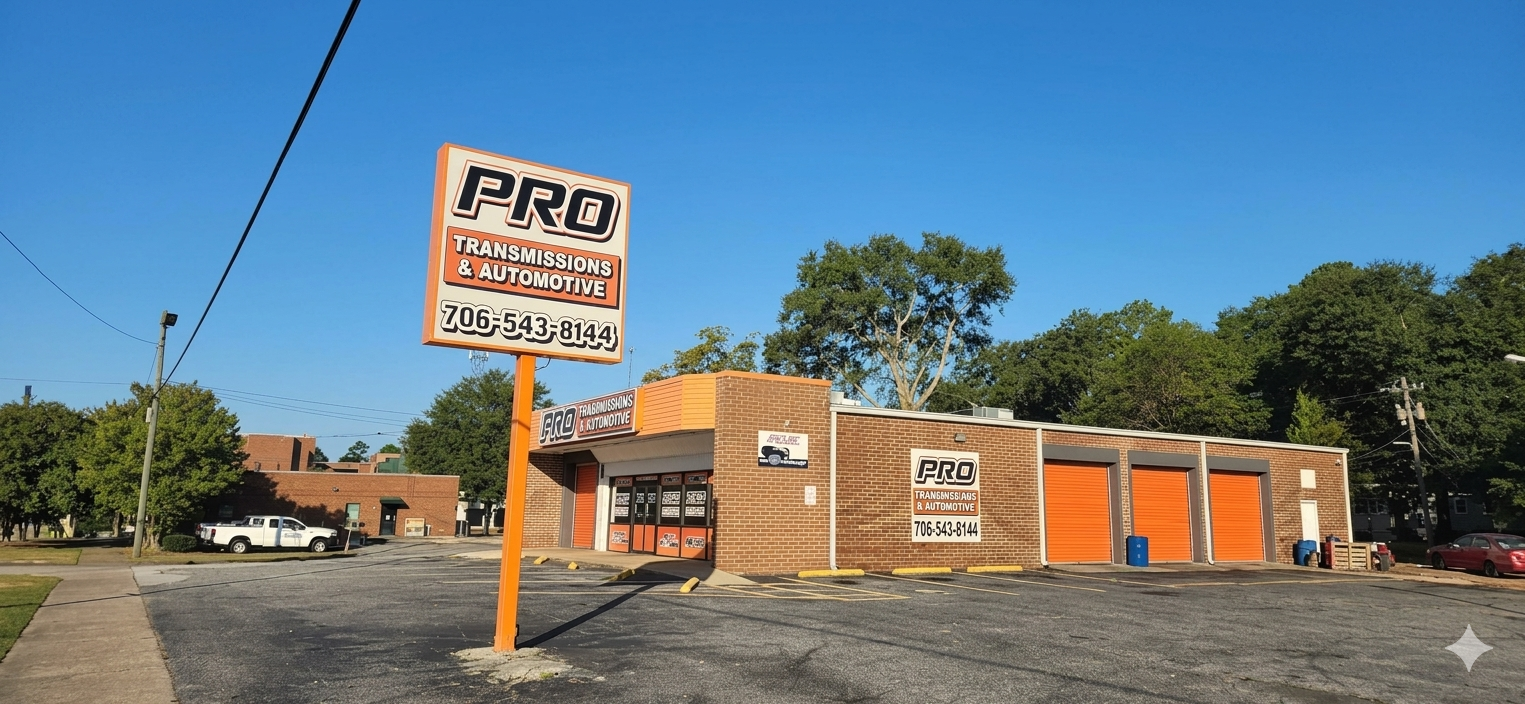
Whether you’re dealing with transmission trouble, engine diagnostics, or brake repairs, the same principles apply. Find a shop with certified technicians, clear communication, and a track record of honest service. At Pro Transmissions & Automotive of Athens, we offer ASE Master Certified technicians, digital inspection processes, industry-leading warranties, and a commitment to customer approval before any work begins.